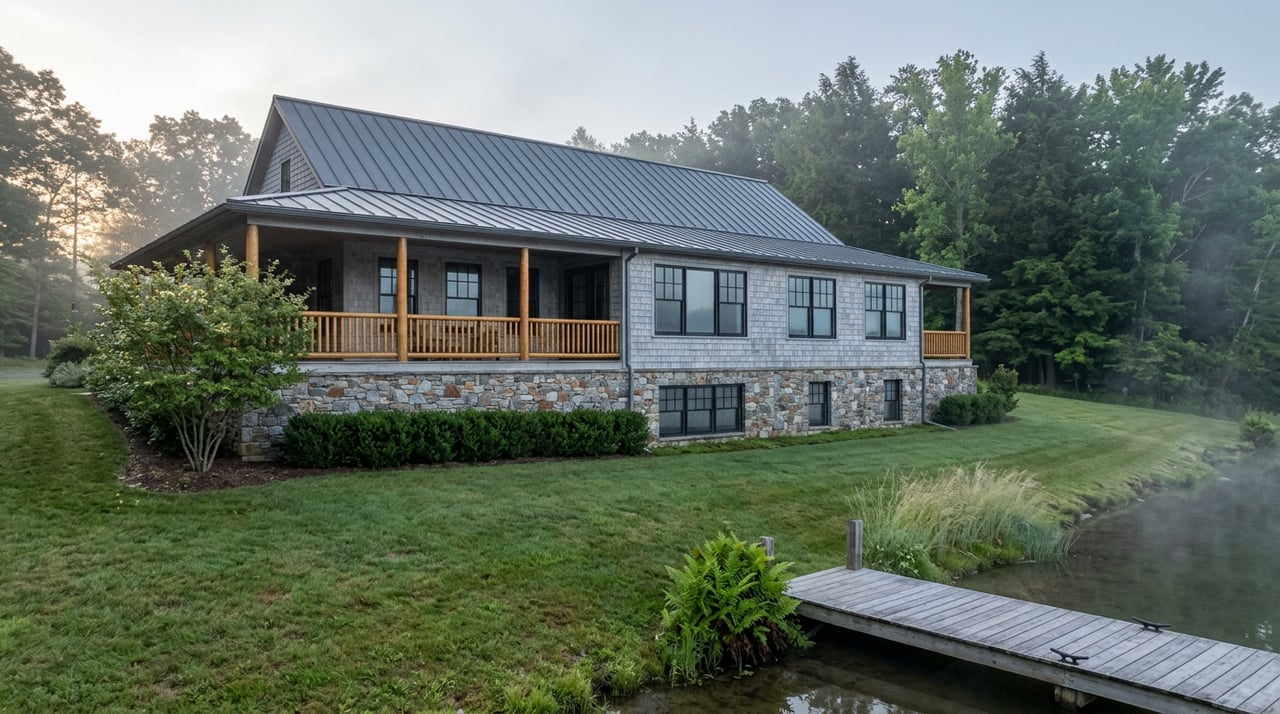
A couple closes on a lakefront lot in Dandridge in June. The listing said dockable, the photos showed a boat tied up thirty feet from the back door, and the seller mentioned in passing that there was already a dock in place. Everyone was happy. Then December comes, the lake drops, and the buyer walks out to find the dock sitting on mud, with no boat anywhere near water. A call to the Tennessee Valley Authority turns up a second problem: the dock permit was never transferred into their name, and technically they've been out of compliance since the day they closed.
Nothing about this story is exotic. It is close to the median experience of a Douglas Lake buyer who took "dockable" at face value instead of pulling on the two threads underneath it: who holds the federal permit, and how much water is actually at that dock in the season nobody photographs.
What "Dockable" Actually Promises
On a Douglas Lake listing, "dockable" usually means one thing to the seller and three things to TVA. The seller means the lot has water access and probably a structure already built. TVA cares about three separate facts that can each be true or false independently of the other two: whether the parcel has land rights below the shoreline contour that allow a dock at all, whether a Section 26a permit for that specific structure has been issued and is current, and whether that permit is registered to the person who currently owns the property.
A dock can be standing, functional, and still be out of compliance if the third condition isn't met. That is the gap most buyers don't know to check, because nothing about the physical dock changes when ownership changes hands. The wood is the same wood. The paperwork just quietly stops matching reality.
The Permit Is a License, Not a Deed
TVA is direct about this on its own guidance for buying or selling waterfront property: permits do not automatically transfer with the sale. The new owner is required to apply for a Section 26a transfer within 60 days of closing. Miss that window, and TVA can treat any later application as a request for a brand new structure rather than a transfer, which means the dock may have to meet current rules instead of the older rules it was originally built under. A dock that was grandfathered in years ago under looser dimensions can lose that grandfathering entirely if the paperwork lapses.
The mechanics are not complicated once you know they exist. A straight transfer runs $250. A new construction permit runs $500. TVA's own FAQ notes that a complete application can take up to 120 days to process, so a buyer who wants to be on the water by Memorial Day needs to be filing paperwork well before spring, not after the moving truck leaves. None of this shows up on a standard purchase agreement. It shows up on a federal form that most title companies aren't set up to chase down for you.
For a seller, the practical takeaway is just as direct. If you're listing a home with a dock and you can't produce the permit number or the most recent transfer confirmation, that's a disclosure gap worth closing before a buyer finds it for you during their own due diligence.
Forty Feet of Winter Reality
The second piece of "dockable" that a summer showing hides completely is depth. Douglas Lake is not a natural lake. TVA operates it as flood storage, which means the reservoir is drawn down every fall on purpose, not by accident. A Government Accountability Office review of TVA's tributary reservoirs documented the design pattern directly: Douglas is typically lowered from a summer pool near 990 feet above sea level down to around 940 feet by January 1, a swing of roughly 50 feet built into how the lake is managed. TVA's own seasonal release updates confirm the same rhythm in practice, with the agency beginning to move water out of Douglas and its sister reservoirs after Labor Day each year to make room for winter rain.
That swing is exactly why the marinas that live on this lake year-round, places like Swann's Marina, Mountain Cove Marina, and Smoky Mountain Lake Adventures, build their operations around seasonal access rather than fighting it. A cove that reads as deep water in July can be exposed mud by January. A dock permit that says "approved" says nothing about whether the water will actually reach the dock in the months when the lake is drawn down for flood control.
This is the detail that separates a main-channel lot from a cove lot in ways a listing photo can't show. Main-channel and deep-water parcels hold usable depth longest through the drawdown. Shallow coves lose it first and can leave a technically dockable structure sitting well above the waterline for a good part of the off-season.
| What you're looking at | What summer tells you | What winter tells you |
|---|---|---|
| Main channel lot | Deep water, easy access | Usually still has workable depth at winter pool |
| Interior cove lot | Looks identical to main channel | Often exposed or too shallow to launch by January |
| "Dockable" on the listing | A permit likely exists somewhere | Says nothing about whether it's in the current owner's name |
The 2016 Line Nobody Draws on the Listing Sheet
Some of the older cabins and floating structures around Douglas Lake predate a rule that quietly ended new construction of a specific kind. Under TVA's Section 26a regulations, no new floating cabins have been allowed on the Tennessee River System since December 16, 2016. Structures that existed before that date can remain and be repaired, but they can't be expanded, and a new floating cabin cannot be added anywhere on the system regardless of what a seller might describe as an option. TVA reaffirmed this cutoff in a final rule published in December 2024, so it isn't a lapsed policy from a decade ago. It's still the operating rule today. A buyer picturing a floating structure as a future addition to a Douglas Lake property should know that door has been closed since 2016.
What This Actually Costs
The dollar difference between a lot that is genuinely dockable and one that only looks the part is not small. As of mid-2026, listing data for Douglas Lake parcels around Dandridge shows buildable lots ranging from roughly $30,000 for interior or lake-view parcels up to well over $2 million for the largest dockable, main-channel sites, with plenty of inventory clustering in the low-to-mid six figures for confirmed dockable lots in gated communities like Stonebridge on Douglas Lake, Waterside on Douglas, and Majestic Bay. That spread exists because dockability is treated as a premium feature, not a given. A buyer paying dockable pricing for a lot that turns out to have an unpermitted or unregistered dock isn't just facing a paperwork problem. They may have overpaid for a feature they don't currently, legally, have.
Before You Write the Offer
A few questions answer most of what a summer showing can't:
- Ask the seller directly for the TVA Section 26a permit number and the date it was last transferred into their name.
- Call TVA's Public Land Information Center yourself before closing to confirm the permit is active and matches the structure as built.
- Ask for or find water depth photos taken between November and February, not just peak summer season.
- Confirm whether the lot sits on the main channel or in an interior cove, since that alone predicts how much of the year the dock stays usable.
- If a floating cabin is part of the property, confirm in writing that it predates December 16, 2016 and holds a current permit under the post-2021 health and safety standards.
None of this requires a lawyer to check. It requires knowing which three questions actually matter before you're the one standing on a dry dock in January wondering what went wrong.
FAQ
Does the dock permit ever automatically transfer with the property? No. TVA requires the new owner to file for a Transfer of Ownership within 60 days of closing, regardless of how long the previous owner held the permit.
What happens if the 60-day window is missed? TVA can treat a late application as a new construction request rather than a transfer, which may require the dock to meet current standards instead of the terms it was originally approved under.
Can I add a dock to a lot that doesn't currently have one? Only if the parcel has the underlying land rights and TVA approves a new Section 26a permit, a process that TVA states can take up to 120 days from a complete application.
Is winter drawdown the same every year? The scale varies with rainfall, but TVA's operating design lowers Douglas from a summer pool near 990 feet toward roughly 940 feet by January 1 in a typical year, which is why depth at the dock should be checked in more than one season before buying.
Douglas Lake rewards patience more than it rewards a pretty summer photo. If you're weighing a dockable lot, a lake-view lot, or a cabin that already has a structure in the water, it's worth having someone walk the permit history and the seasonal depth with you before you're locked into a purchase agreement. That's the kind of homework Karah Mae Chancey does before a client ever writes an offer on the water.